

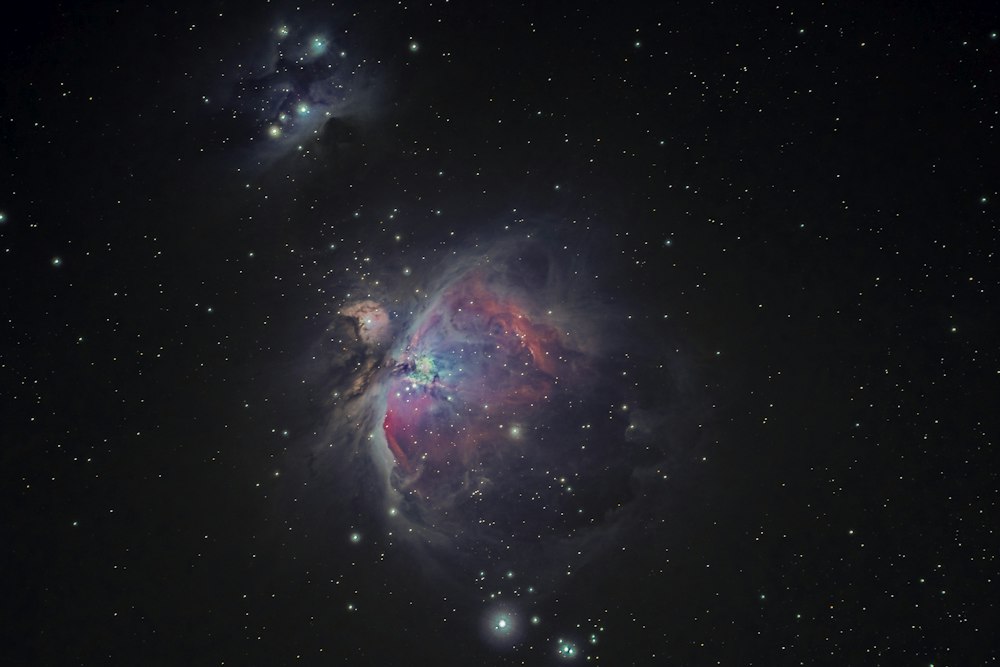
The first Supermoon of 2026 illuminates the horizon. (Photo: Unsplash)
The Wolf Supermoon of 2026: A Spectacular 1,000-Word Deep Dive into the Year’s First Celestial Wonder
By TimesNews USA Staff | Published: January 3, 2026
Table of Contents
Introduction: The Lunar Reset of 2026
The year 2026 has arrived, and with it, a cosmic display that has captured the attention of millions across the globe. Tonight, as the clock strikes the peak of the first weekend of the New Year, the Wolf Supermoon dominates the night sky. For readers of TimesNews USA, this isn't just a pretty sight—it is a rare alignment of history, science, and cultural tradition.
As we stand at the threshold of a new year, the Supermoon serves as a "Lunar Reset." While many are busy with resolutions and lifestyle changes, the universe is offering its own spectacle of renewal. This specific full moon is larger and brighter than any we saw in late 2025, making it a "must-see" event for families, photographers, and amateur astronomers alike.
"The January Wolf Moon is a bridge between the darkness of winter and the returning light of the new year."
The Folklore: Why is it called a "Wolf Moon"?
The naming of our celestial neighbors is often more poetic than scientific. The term "Wolf Moon" finds its origins in the deep winters of North America and Europe. According to the Old Farmer’s Almanac, indigenous tribes and early settlers noticed that wolves howled more intensely during the month of January.
[attachment_0](attachment)Historically, it was believed that wolves howled out of hunger during the lean winter months. However, modern zoology suggests a different reason. Wolves are highly social creatures, and January marks the beginning of their breeding season. Their howls are more frequent as they define their territories and coordinate hunts across the frozen tundra. The cold, crisp air of January allows sound to travel much further, creating the haunting atmosphere that gave this moon its famous name.
The Science: What Makes it a "Supermoon"?
While "Wolf Moon" is a cultural name, "Supermoon" is a scientific phenomenon. The Moon’s orbit around Earth is not a perfect circle; it is an ellipse. This means there are times when the moon is significantly closer to our planet.
When the moon reaches its perigee—the point closest to Earth—at the same time it is in its "full" phase, we witness a Supermoon. Tonight's moon is roughly 226,000 miles away. This proximity causes the moon to appear 14% larger and up to 30% brighter than a "Micromoon" (when it is at its furthest point). For the casual observer, this extra brightness is enough to cast shadows on the ground even in the middle of the night.
Viewing Guide: Best Times and Locations
Timing is everything when it comes to astrophotography. While the technical peak occurred at 5:03 a.m. EST on Saturday, January 3, 2026, the moon will appear spectacular all through Saturday night.
The "Triple Threat": Meteors and Jupiter
What makes tonight particularly special for 2026 is that the moon isn't alone. We are currently in the middle of a "Celestial Triple Threat":
- The Wolf Supermoon: The main event.
- The Quadrantids Meteor Shower: Peaking this weekend, providing flashes of "fireball" meteors across the sky.
- Jupiter at Opposition: The largest planet in our solar system is sitting just to the right of the moon, appearing as a bright, steady white dot.
2026 Lunar Calendar: Upcoming Events
If you enjoy tonight's view, you'll be happy to know that 2026 is a big year for space lovers. Here is a handy table for your reference:
| Date | Moon Name | Event Type |
|---|---|---|
| January 3 | Wolf Moon | Supermoon |
| May 31 | Flower Moon | Blue Moon |
| August 12 | Sturgeon Moon | Partial Eclipse |
Conclusion: Connection in a Digital Age
In our modern, high-speed world, we often forget to look up. The Wolf Supermoon of 2026 is a reminder that some of the most beautiful things in life are free and accessible to everyone. Whether you are viewing from a skyscraper in New York or a farm in Kansas, we are all looking at the same sky.
At TimesNews USA, we encourage you to take five minutes tonight to step outside, breathe in the winter air, and witness the majesty of our solar system. It is the perfect way to center yourself for the year ahead.
Keywords: Wolf Moon 2026, Full Moon January, Supermoon peak time, Astronomy for beginners, TimesNews USA science, Skywatching guide 2026.



0 Comments